Hydrocarbon Exploration and Refining
2 min read
In just two minutes, find out how the search for oil and gas deposits is carried out and how is then refined into a variety of finished products.
Fossil Exploration and Refining in 2 Minutes
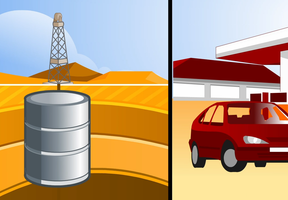
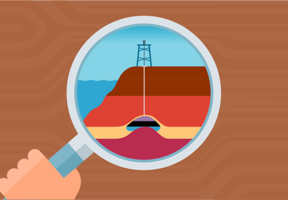
Exploration = the search for deposits such as oil.
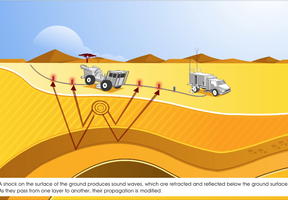
Phase 1: subsurface ultrasound
Seismic waves are sent underground. They are generated using truck-mounted vibrators or air guns in areas.
Phase 2: exploratory
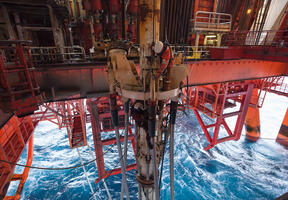
A borehole is drilled and filled with . The mud brings hydrocarbon samples to the surface that confirm whether or not there is an oil deposit. Once a deposit has been identified, fossil fuel extraction can begin.
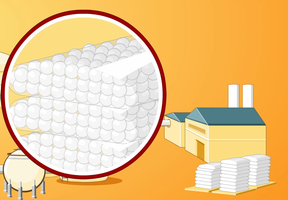
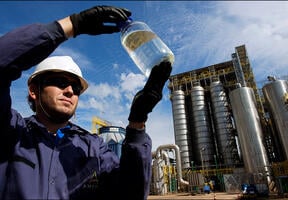
Refining = an essential step in converting fossil fuels into a variety of finished products.
There are 3 key steps at an oil refinery:
- Separation:
The oil is heated and evaporated using a distillation column. (Crude oil/Distillation furnace/Distillation column)
The molecules condense into liquids or remain in gas form. They are captured by panels and then serve a variety of purposes.
(+ légendes - gas/petrochemicals/naphtha/jet fuel/ / / ) - Conversion:
Liquids are converted into natural gas, gasoline and diesel using a catalyst, a substance that speeds up a chemical reaction. - Purification:
Molecules that are corrosive or harmful for the environment, especially sulfur, are removed or significantly reduced.
Summary:
- Exploration = the search for fossil fuel deposits./Phase 1: subsurface ultrasound/Phase 2: exploratory drilling
- Refining = an essential step in converting fossil fuels into a variety of finished products.
- 3 key refining steps: Separation/Conversion/Purification.
 This may interest you
See all