Storage of crude oil and petroleum products: challenges and safety
5 min read
Industrialized countries maintain oil and gas reserves so that they can adjust supply in real time to fluctuating consumer demand. Storing hydrocarbons also provides protection against national and international crises and allows to be stored awaiting refining.

© LABELLE MICHEL - TotalEnergies - Tank farm at the SATORP refinery in Jubail, Saudi Arabia.
Strategic stocks: ensuring energy security in Europe
Since the 20th century, oil has been a highly strategic resource for industrialized countries: this energy source has enabled them to develop and has become indispensable to the functioning of their economies.
This is why they ensure that they build up stocks of crude oil and finished petroleum products. These reserves are intended to guarantee them a certain degree of autonomy in the event, for example, that their oil imports were to cease abruptly for reasons of international politics.
In 1968, the European Commission required European Union (EU) member states to maintain stocks equivalent to 65 days of consumption. In 1972, in the context of the oil crisis, this threshold was raised to 90 days. In addition, since 2012, all EU member countries have been required to publish a monthly report on the status of their stocks.
Safety rules for oil storage: what are the requirements?
Freshly delivered crude oil can also be stored for a period of time, not for strategic reasons, but simply because it is awaiting refining.
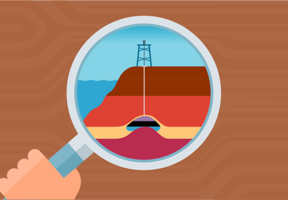
In France, strategic stocks are managed by SAGESS (Société Anonyme de Gestion de Stocks de Sécurité), a state-controlled company with around 50 depots across the country. Petroleum products are stored in tanks of various sizes, sometimes in underground cavities. European regulations require an overall level equivalent to 90 days of consumption, but regional stocks can be organized to ensure the availability of key fuels.
Storage facility managers ensure that certain safety conditions are met. The main aim is to prevent two types of risk:
- fires;
- soil and groundwater pollution due to potential leaks. To prevent this pollution, the condition of the tanks and their degree of , i.e., their level of wear, are checked regularly. Over time, they can be corroded and damaged by the acidic gases contained in petroleum (CO2, sulfide).
 This may interest you
See all