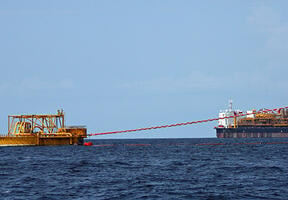
Finding Oil and Natural Gas Deposits
2 min read
Seismic reflection involves transmitting sound waves beneath the surface. The reflected waves return to the surface and are recorded, producing an image similar to a sonogram.
Finding Oil and Natural Gas Deposits
To spot accumulations, several methods are available to the geophysicist. Among these, one can use seismic, which consists of making a veritable echography of the substratum.
A shock on the surface of the ground produces sound waves, which are refracted and reflected between the ground surface. As they pass from one layer to another, their propagation is modified.
The geophysicist, with the aid of a series of very sensitive microphones called “geophones”, listens to and records the wave echo from the surface.
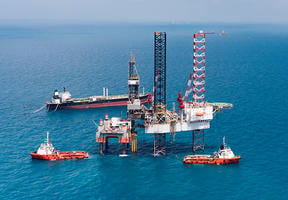
Reconnaissance of the land being impracticable at sea, use is systematically made of seismic methods. And as a ship moves freely in all directions, the seismic measurements are easier to obtain at sea than on land.
The seismic recordings collected by the geophysicist are analyzed by highly powerful computers.
Thus, images are obtained, in two or three dimensions of the layers constituting the substratum. This seismic imaging is analyzed to find out if certain layers are likely to contain hydrocarbons.
 This may interest you
See all