Offshore Oil and Gas Production
5 min read
and gas production—that is, “at sea”—has become an indispensable part of the global energy supply. It involves increasingly advanced technologies and a growing focus on environmental impacts.
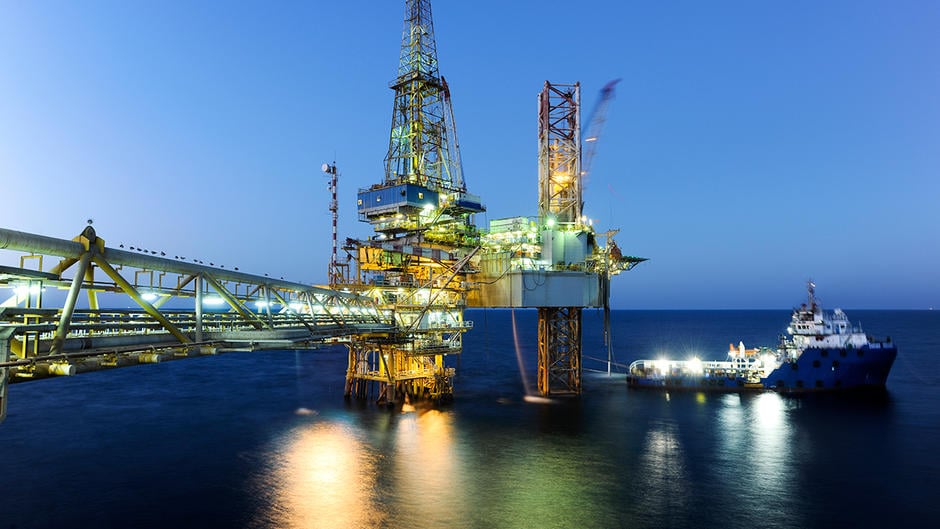
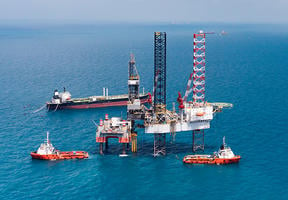
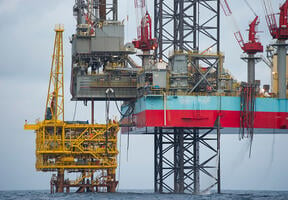
© SORDOILLET PATRICK - TotalEnergies - The PARAGON L1115 located some 100 km off the shore of Qatar.
In 2024, offshore production accounts for 30% of global oil production and 32% of gas production. These percentages have remained stable since the beginning of the 21st century, despite the rapid development of unconventional hydrocarbons such as and . The importance of production is expected to remain steady: it is estimated to account for 20% of global oil reserves and 30% of global gas reserves.
The main constraints are economic and environmental. Despite technological advances, the costs of exploration, platform and specialized vessel construction, , and hydrocarbon extraction represent investments amounting to billions of dollars per operation. Each project must be analyzed on a case-by-case basis to determine its economic viability.
As for accidents, such as the Macondo (Deepwater Horizon) incident in the Gulf of Mexico in April 2010, they have led all companies to conduct systematic reviews of existing facilities, to evolve the design of subsea installations, and to strengthen best practices. The scale of potential damage and its effects on the environment and are given special attention during the design phase and are subject to enhanced monitoring during operations.
The Expansion of Deepwater Offshore Operations: New Areas, New Depths
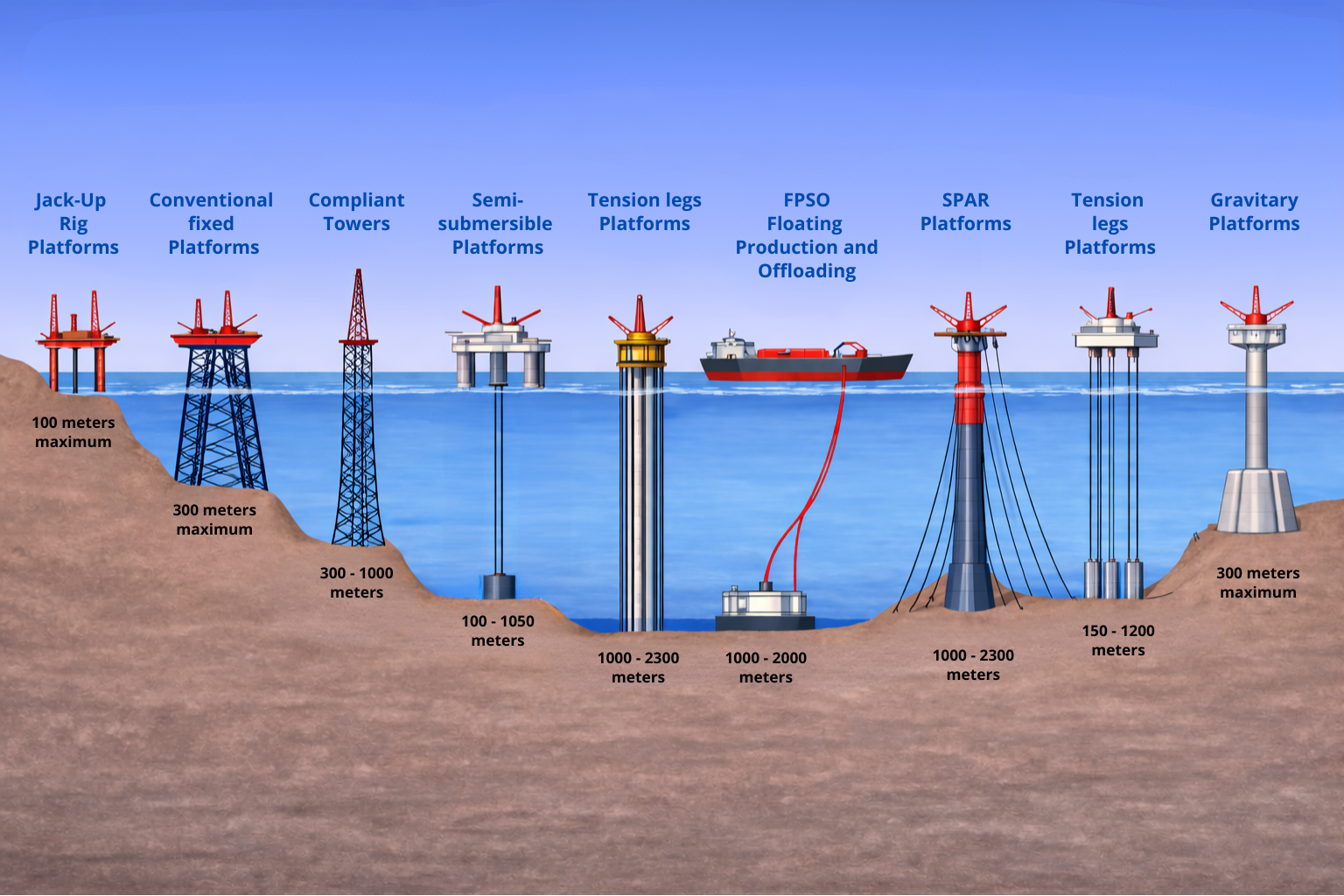
Offshore drilling began in the 1950s with the installation of platforms resting on the seabed—supported by metal piles or concrete foundations—in shallow waters, at depths of around 200 meters. The 1973 oil crisis led to intensive development of the North Sea. Even today, half of the 20,000 platforms in operation are fixed. Starting in the 1990s, deep-water offshore development expanded to depths of 400 to 1,500 meters, and even beyond into “ultra-deep” waters. Today, water depths exceed 3,000 meters, and the industry has its sights set on 4,000 meters. Of course, several thousand meters of sediment must be penetrated to reach the deepest hydrocarbon reservoirs.
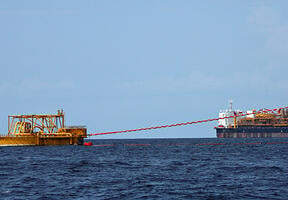
These deepwater operations are taking place farther and farther from the coast. For example, the development of the Libra field, more than 200 km south of Rio de Janeiro, targets oil reservoirs beneath the salt layer—that is, approximately 3,500 m below the seafloor, which itself lies at a depth of 2,000 m. These fields are primarily operated by Floating Production Storage and Offloading (FPSO) vessels.
Diagram of the Different Types of Offshore Oil and Gas Platforms:
Deepwater offshore drilling is growing rapidly: its share of global oil production has risen from 3% to about 6% since 2008.
Deepwater Offshore Technologies: Toward True Underwater “Factories”
At such depths, the challenges are numerous1:
- Fixed platforms, connected to wellheads by rigid pipes, must be replaced by floating installations connected to the wells by flexible pipes (risers) that transport hydrocarbons to the surface. Some risers are used to inject water and/or gas into hydrocarbon reservoirs to enhance production. They must be wrapped in insulated sleeves. , which typically emerges at over 50°C, must be maintained at a certain temperature to prevent the formation of hydrates and wax (ice- or wax-like substances that can clog risers and pipes). More and more operations are being carried out on the seafloor, such as the separation of oil and gas, effectively creating a true underwater “plant.”
- To transport the production from the wellheads to the surface, a network of pipelines is laid on the seabed by specialized vessels and underwater robots. However, if the field is far from the coast and lies at a depth of more than 1,000 meters, a barge or is preferred, as it performs the triple function of production, storage, and offloading (the transfer of hydrocarbons between the barge and the tanker). These FPSOs can store up to 2.5 million barrels. A single field may have several FPSOs, which can remain in place for 20 to 25 years.
FLNG: Offshore Gas Liquefaction, a New Chapter in Offshore Development
With the aim of bringing all operations as close as possible to the production site, oil and gas companies are exploring projects that allow gas to be liquefied immediately upon production on floating vessels. The advantage is that there is no need to build gas pipelines and plants on the coast, projects that are always costly and controversial due to their environmental impacts on land.
Sources:
 This may interest you
See all