Transporting Oil by Land
10 min read
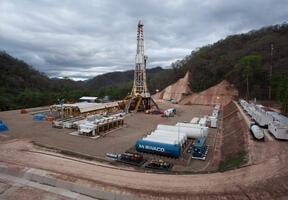
Economic, geographical or political reasons can sometimes make transporting oil by land a better option than shipping it by sea. In such cases, oil pipelines are used to link ports, refineries and points of consumption.

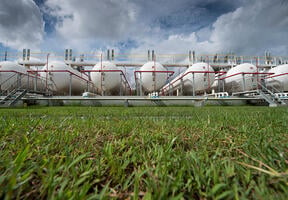
© Thinkstock - Pipelines are used to transport oil on land.
Pipelines are large structures that carry tens of millions of metric tons of oil each year. The longest pipeline in the world is the 5,237-kilometer Druzhba pipeline, which runs through eight countries — Russia, Ukraine, Belarus, Poland, Hungary, Slovakia, the Czech Republic and Germany.
The Pipeline, Land-Based Option
Generally speaking, the oil industry prefers to ship oil by sea because this mode of transportation is more flexible. Unlike a pipeline, a ship does not have to take the same route every time, which means it can be adapted to meet demand. However, sometimes oil has to travel over land, for example to landlocked countries.
In this case, it can be easier and less costly to use a pipeline than to transport oil by road or train.
- In large countries like Russia, pipelines are useful to deliver oil to ports for export by ship.
- Western Europe has pipeline networks that carry crude from ports to refineries located further inland. These are also used to transport finished products — transportation and feedstock for the petrochemicals industry — from refineries to major consumer regions.
Monitoring of Oil Pipelines
To facilitate the flow of in a pipeline, pumping stations located every 60 to 100 kilometers increase pressure as the oil passes through. Inside a pipeline, oil travels 2 meters per second or 7 kilometers per hour, the same speed as an elephant.
Whether oil is transported by sea or pipeline, the safety and security of operations is key. If a pipeline is damaged accidentally or sabotaged, leaks can be quickly detected because of the sudden drop in pressure recorded. When a leak is confined to a specific point, the oil flow is stopped as soon as possible at the pumping stations to contain any spill.
However, leaks due to pipe can be major. Oil contains acid gases such as carbon dioxide and sulfide, which corrode metal pipes over time. To prevent such accidents, pipelines must be regularly inspected and sections replaced.
The Geopolitical Challenges of Oil Pipelines
There are major geopolitical and economic issues involved in pipelines, often leading to difficult negotiations or environmental concerns, sometimes even military confrontations. Here are a few striking examples.
- Eastern Europe: Geopolitical Tensions Surrounding the Druzhba
Russia's invasion of Ukraine in February 2022 severely disrupted the operation of the Druzhba pipeline, which until 2023 supplied several European countries: Germany, Poland, the Czech Republic, Slovakia, and Hungary. In response to international sanctions, the first three countries have ceased importing Russian oil, while Slovakia and Hungary have continued their purchases. This situation created tensions, particularly after Ukrainian drone strikes targeted the pipeline, prompting a reaction from the Hungarian government. Other attacks targeted the Russian port of Primorsk on the Baltic Sea, which serves as the terminus of land-based oil pipelines.
- North America: Environmental and Political Debates
The Keystone XL pipeline extension project, designed to transport oil from Canada's to the Gulf of Mexico, has been met with fierce opposition. In November 2015, President Barack Obama canceled its construction. His successor Donald Trump revived the project it in March 2017, before Joe Biden shut it down again. In February 2025, Donald Trump, now president once again, announced his intention to restart the project.
- Africa: Logistical and Security Challenges
New oil pipelines are currently under development, particularly in Africa and the Middle East. The 1,950-kilometer Niger–Benin Export Pipeline (NBEP) began operating in 2024. Built by a Chinese company, it transports oil from Niger to the Atlantic Ocean, between Agadem and Cotonou. Its launch, initially scheduled for January, was delayed by a border dispute between the two countries, then by an attack by a rebel group. The pipeline was repaired and brought back into service in August 2024. It is the longest oil pipeline in Africa. In Canada, the 1,150-kilometer Trans Mountain Expansion pipeline was inaugurated in May 2024. It doubles an existing route between Edmonton and the Pacific coast.
 This may interest you
See all