Hydrogen: How is Japan Investing in Research to Become the World Leader?
10 min read
Japan was the first country to publish a national strategy, back in 2017, thereby affirming its pioneering role in building a society where this energy source would play a central role.
Its geography, marked by limited territory, reduces the possibilities for large-scale development of renewable energies. Added to this is the absence of fossil resources in its subsoil, which makes the country heavily dependent on energy imports, mainly fossil fuels. Hydrogen therefore appears to be a strategic solution for diversifying and securing its supply.

© ETIENNE BALMER / AFP - A 2,500 cubic meter liquid hydrogen tank in the port of Kobe. A terminal for importing hydrogen, particularly from Australia, has been installed in the large Japanese port near Osaka
Research and Innovation: Japan Leads the Way in Hydrogen
Japan is one of the countries that allocates the most funds to research and development (R&D) per capita and has done so for many years. The country accounts for 5% of the global R&D budget for 2% of the world's population. The Japanese approach to research involves the methodical study of all options over a long period of time, bringing together academic research and industrial development in an integrated manner. Hydrogen is a prime example of this comprehensive approach. Japanese researchers did not segment the different uses of hydrogen, but instead studied its place in all sectors in parallel. They explored its potential in industry, housing, and all forms of mobility. From the outset, they considered its production, the choice of the most suitable countries to produce it, and its transport to Japan. This multifaceted approach is part of what they refer to as a “roadmap.”
Hydrogen in Homes: How Japan Heats its Buildings
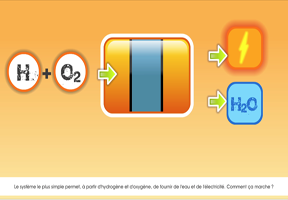
Hydrogen fuel cells were first used in stationary installations to supply buildings with electricity and heat. Hydrogen is produced in a boiler from city gas. The fuel cell generates electricity and releases heat, which is recovered for domestic hot water and heating. The Japanese tradition of highly standardized, identical houses favors the development of these stationary boilers, which are about the size of a closet. The government supports this industry and expects to have 5.3 million units in use by 2035.
Hydrogen Cars: the Gamble Taken by Japanese Manufacturers
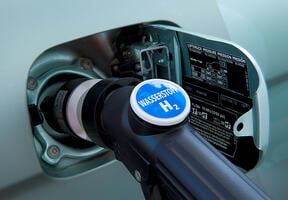
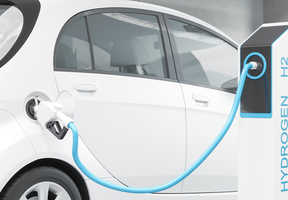
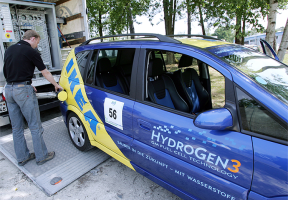
Hydrogen was then used in the mobility sector. Manufacturers first produced buses and trucks, then the first passenger cars (such as the Toyota Mirai and Honda Clarity) appeared in 2015. This is still a niche market, with 8,000 cars expected in 2025.
Hydrogen cars require a sufficiently dense supply network. The concentration of gas compressed to 700 bar impose strict safety rules, to which the Japanese traditionally pay close attention. Each station is therefore very expensive, costing six or seven times more than a conventional station, adding to the overall cost of the industry.
Producing and Transporting Hydrogen: Japan's Challenges
Experts have grappled with the issue of hydrogen production. Reforming from hydrocarbons is the least expensive method but does not ultimately result in “carbon-free” electricity. Electrolysis using renewable electricity currently costs 5 to 7 times more, and solar and wind power potential is low in Japan.
The Japanese roadmap therefore quickly turned its attention to importing hydrogen from countries with high energy potential, such as Australia and the Gulf states.
Three options have emerged for its transport:
• Compressed gas. This solution involves additional compression costs and technical storage difficulties, as hydrogen is highly volatile.
• Cryogenics. This involves transporting it in liquid form at -253°C, close to absolute zero! Major Japanese companies are working on this, and the first liquid hydrogen transport ship, a “hydrogen carrier,” began operating between Australia and Japan in 2023.
• Combination with another . The principle is to combine the hydrogen with another atom to produce a more easily transportable molecule, then recover the hydrogen on arrival through a reverse1 process. Most solutions are based on combinations with carbon. But Japanese experts are particularly interested in the other most abundant atom in the atmosphere, nitrogen. Together with hydrogen, it forms a very simple molecule, ammonia (NH3), which chemists have known how to produce for over 100 years. We know how to transport it by , and there is already a global trade in it.
1 Japanese chemists have tested (CH3OH) and dimethyl ether (CH3OCH3), for example.
 This may interest you
See all