COP31 in Antalya: What Are the Climate Challenges in 2026?
5 min read
COP31 will take place from November 9 to 20, 2026, in Antalya, Turkey. Its goal is to raise ’s share of global energy consumption to 35%. This priority reflects the growing role of electricity in many areas, from transportation and industry to the data centers needed to develop artificial intelligence.

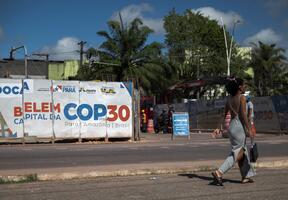
© AFP / Goksel Yapar - Sign reading “COP31 Antalya” near the entrance to the Antalya Expo Center in Turkey.
Turkey will chair COP31 in partnership with Australia, which will be responsible for organizing negotiations among the participating countries. According to the initiative’s designers, this new arrangement is intended to promote concrete projects rather than commitments that are never followed through.
COP31: What Are the Goals for Electricity, Waste, and Cities?
The Turkish presidency has announced three main goals:
- Electrification: raise electricity’s share of final energy demand from just over 20% today to 35% by 2035, a goal known as “35 by 35.”
- Waste: cut the growth of waste worldwide by half by 2035.
- Resilient cities: reduce energy-use intensity in the building sector by at least 25% by 2035.
The usual themes of climate COPs remain fundamental: mitigating and adapting to its consequences, reducing emissions, and developing . But COP31 approaches them from new angles that directly affect people and their daily lives, including transportation, consumption, and housing.
COPs and the Paris Agreement: What Is the Difference?
Every year since 1995, the Conferences of the Parties, or COPs, have brought together the Parties to the United Nations Framework Convention on (UNFCCC). Alongside countries and the European Union, cities, companies, and civil society organizations also take part.
One of the most important conferences was COP21, held in France in December 2015. It adopted the Paris Agreement, the first universal agreement designed to mitigate climate change and adapt to its effects. The Agreement aims to keep the rise in global average temperature well below 2°C above pre-industrial levels and pursue efforts to limit it to 1.5°C. It encourages countries to define their own CO₂ emissions-reduction efforts and provides financial assistance for the poorest countries (see the list of COPs).
Ten years after the Paris Agreement, however, the world is still far from a pathway compatible with the goals for limiting global warming.
Why Is Global Electricity Consumption Increasing?
The first priority reflects a global trend: electrification is transforming the way energy is used. According to the International Energy Agency (IEA), electricity consumption more than doubled between 2000 and 2024, rising from about 15,000 to more than 30,000 terawatt-hours (TWh). It is expected to approach 45,000 TWh by 2035.
This rise is driven by population growth, higher living standards in emerging economies, industrialization in Asia, wider use of air conditioning, and the growth of data centers and artificial intelligence. Many activities that once relied on fossil fuels are gradually being electrified, including vehicles and heating.
This raises an essential question: how can the world generate more electricity while limiting greenhouse gas emissions? The debate still centers on reducing fossil fuel use, expanding renewable energy, and adapting nuclear power to future needs.
COP31: What Are the Challenges for Efficiency, Sufficiency, and Citizens?
The second priority concerns waste and the circular economy. Cutting global waste growth by 50% requires limiting wasted resources and emissions from landfilling or incineration, while supporting recycling, material reuse, and sufficiency.
The concept of energy sufficiency is receiving increasing attention.
COP31 also places greater emphasis on individual behavior and consumer choices, while previous COPs mainly addressed governments and companies.
The third pillar is resilient cities in the face of climate change. In many parts of the world, waves, floods, and storms require new urban planning strategies in major metropolitan areas, which are home to a growing share of the global population. The Turkish presidency will notably propose improving the of buildings.
Beyond these three themes, financing action in developing countries will remain central. It is discussed at every COP, often with insufficient results. The Turkish presidency wants to steer the global debate toward concrete sector-specific measures rather than new statements of principle.
Why Are Three COPs Taking Place in 2026?
The climate COP is not the only COP. Within the United Nations system, three Conferences of the Parties grew out of the three major international conventions signed at the 1992 Earth Summit in Rio de Janeiro.
Three summits are taking place in 2026:
- August 2026: the desertification COP, under the United Nations Convention to Combat Desertification, is held every two years and took place in Ulaanbaatar, Mongolia.
- October 2026: the COP, under the Convention on Biological Diversity, is also held every two years and will take place from October 19 to 30 in Yerevan, Armenia.
- November 2026: the climate COP, under the United Nations Framework Convention on Climate Change, will take place in Antalya, Turkey.
The issues discussed, including land degradation, drought, and biodiversity loss, are closely linked to the effects of climate change.
 This may interest you
See all