The Different Forms of Ocean Energy
Updated on 10.08.202010 min read
Renewable ocean energy is categorized based on which properties of the ocean are used, such as motion, or salinity.

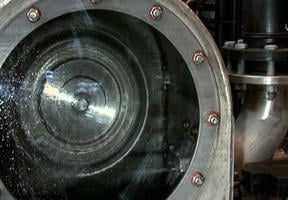
© FRED TANNEAU / AFP - A tidal turbine is tested in Brest before being installed: one of the most advanced marine technologies.
Excluding , ocean energies are categorized as:
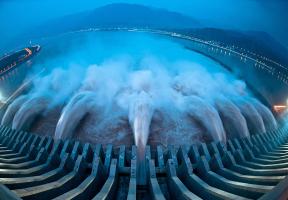
- Tidal energy: Like conventional hydroelectric dams, tidal plants, built on river estuaries, hold back huge amounts of water twice a day, which generates power when released (See Close-Up: "Tidal Energy").
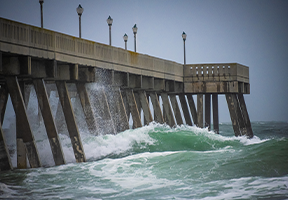
- Wave energy: The force of waves can drive mechanical systems to generate power. Originally located just off the coastline, increasingly large experimental plants are now moving to the open sea (See Close-Up: "Wave Energy: Harnessing the Constant Motion of Waves").
- Ocean current energy: The energy of ocean currents under the surface is comparable to the wind above it. Underwater turbines — large propellers tethered to the seabed — are used to derive power from this source.
- Ocean thermal energy: Oceans a huge heat reservoirs. The temperature differential between warm surface waters and cold deeper layers in intertropical regions can be used to generate steam and then power (See Close-Up: "The Ocean, an Underused Heat Reservoir").
- Osmotic energy: This technique — the most surprising — produces energy from the movement of water across a membrane between a saltwater reservoir and freshwater reservoir.
These forms of energy have undeniable advantages. They are abundant, constant and predictable and can be harnessed in many different regions around the world. Some countries have started experimenting and some facilities are already generating power on a commercial scale1.
Research Avenues for Ocean Energy Sources
The sheer scale of the oceans means that potential production could in theory reach 100,000 to 150,000 TWh a year. In comparison, the world's current power generation capacity stands at 22,000 TWh2.
However, this calculation is purely theoretical as the investments required — which are still very significant — and the uncertainty of the marine environment must be taken into consideration. Commercial-scale installations come with several risks: of materials due to the salinity of seawater and microorganisms, offshore maintenance difficulties, the on landscapes, the marine environment, and competition in these areas from other marine activities such as fishing.
A drop in production costs is also a prerequisite for the growth of ocean energies, even though turbines and wave energy converters are already being developed at lower costs than those seen in early days of wind energy.
Sources:
- French Ministry of Sustainable Development (French only)
- Inter-Mines (French only)
 This may interest you
See all