The Two Types of Solar Energy.
10 min read
Photovoltaic technology directly converts sunlight into . Solar thermal technology harnesses its . These different technologies both tap the Sun’s energy, locally and in large-scale solar farms.

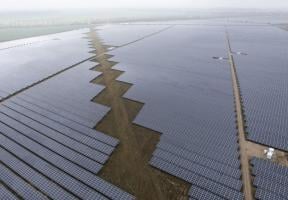
© SUNPOWER CORP - The Olivenza solar power plant in Spain.
Like water and air, the sun is the basis of life on Earth, providing heat and light. Inexhaustible on a human scale, available and non-polluting, solar energy supplies the Earth and its atmosphere with enough energy every 50 minutes to meet the annual consumption of the planet's inhabitants. The challenge is to capture even a tiny fraction of this radiant, caloric energy.
Two major technologies have been developed to harness it:
- Photovoltaic solar technology, which directly converts sunlight into electricity using panels made of cells.
- Solar thermal technology, which captures the sun’s heat. This heat is used directly or converted into and in turn electricity, known as concentrated solar . This heat is used directly (low‑temperature solar thermal) or converted into mechanical energy and in turn electricity (concentrated solar power – CSP).
Two different types of installations are used:
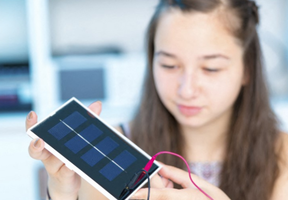
- Individual systems for homes or small communities. Photovoltaic panels can power electrical devices, while solar thermal collectors can heat homes or hot water
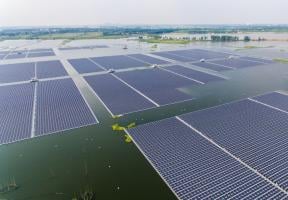
- Large units, "solar power plants", whether photovoltaic or thermodynamic or thermic, deployed over hundreds of hectares, produce electricity and heat on a large scale that can be fed into the grid.
It is this great flexibility, both the power of large plants supplying cities and industries, and the ability to supply electricity and heat locally, that makes solar energy so attractive, particularly in developing countries where 1.3 billion people have no access to distribution networks. Isolated villages benefit from lighting, groundwater pumping (drinking water, irrigation), telecommunications systems (radio, television, mobile phone) and electrical appliances (refrigerator, sewing machine, etc.).
Photovoltaic Solar Power
The converts light into electricity. It was discovered by French physicist Edmond Becquerel in 1839 and was first used in industrial applications in 1954. The principle: an electric current occurs when electrons are displaced. For this to happen, photons (light particles) excite the outermost electrons of the atoms of certain semiconductor elements.
In practice, light hitting a is converted into electricity by a semiconductor, generally . A photovoltaic panel is made up of several cells producing direct current, which is then converted into by an inverter.
The modules, assembled in panels, can be used in small systems or large plants.
Low-Temperature Solar Thermal Power
Low-temperature solar thermal power technology produces heat from the Sun’s rays and uses it directly. Operating at temperatures below 100°C, the installations cater to residential and commercial applications (hot water and heating) as well as to a wide variety of industrial needs. This technology accounts for the lion’s share of solar power generated worldwide.
Solar thermal collectors are used to absorb the heat from the Sun’s rays and transfer it to a , such as air, water or antifreeze, which in turn transports it to the areas to be heated.
Most widespread are flat-plate collectors, which are made up of a dark surface area that absorbs the Sun’s rays and a layer of thermal insulation topped with a sheet of glass that generates a . Collectors operate at up to 70°C above ambient temperature. There are also solar thermal air collectors, used for agricultural crop drying, for example, and unglazed systems made using rubber or plastic, rather than a glass covering, which are used primarily to heat swimming pools. Vacuum tube collectors are best suited to high-temperature industrial uses, such as cleaning slaughterhouses or pasteurizing canned goods. They are made up of glass vacuum tubes for optimal thermal insulation. Inside, an absorber captures the solar energy and transfers it to a fluid.
Concentrated Solar Power
This second type of thermal solar power technology concentrates the warmth of the Sun’s rays using collectors to heat a transfer fluid (gas, oil or molten salt, for example) to a high temperature. The fluid heats a network of water, which produces steam and drives a turbine (mechanical energy), thereby generating electricity.
Heat from the Sun’s rays is collected in large power plants where flat or curved mirrors are installed over vast areas. The technology is best suited to countries where the sunlight is intense, for example in desert regions.
 This may interest you
See all