Oil and gas

Storing Hydrocarbons

07/08/2010


Industrialized countries accumulate oil and gas reserves for strategic reasons.
This provides them with energy resources in the event of political upheaval threatening their supply. Storing hydrocarbons means that supply can be adjusted to fluctuating consumer demand in real time and that crude oil can be stored while it awaits refining.

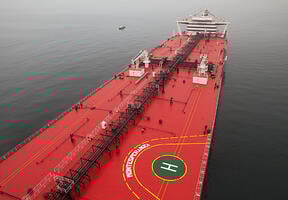
View of a storage container at the Provence refinery in La Mède (France, September 2007) © Total / Dufour Marco

Why Are Oil Reserves Built Up?

Oil has been a highly strategic resource for industrialized countries since the 20th century. This source of energy has enabled them to develop and has become indispensable to the running of their economies. This is why they make sure they have sufficient stocks of crude oil and finished petroleum products.


These reserves provide a measure of autonomy, so that if for example, their oil imports suddenly stop for political reasons, they have something to fall back on.

EU countries need to store the equivalent of three months' worth of oil imports.


In 1968, the European Commission imposed a requirement on member states to maintain the equivalent of 65 days' worth of oil imports in reserves. In 1972, against the backdrop of the oil crisis, this was increased to 90 days. In addition, as of 2012 all EU member states will be required to publish a report on their reserves1 .  In France, regional supplies are built up to ensure 10 days' worth of premium grade gasoline and 15 days' worth of fuel and diesel.

Vrai ou Faux ?
In industrialized countries, oil is stored for purely strategic reasons.
False. Freshly delivered crude oil can be stored not just for strategic reasons, but also simply pending refining.

Depending on the country, storage depots for petroleum products are managed by
state-run companies, private companies or both working in tandem. In France, there are over fifty storage depots. Petroleum products are stored in tanks of variable size, sometimes underground. In the UK, there are about 80 storage depots, most of them managed by the GPSS (Government Pipelines and Storage System)2.

The organizations that manage these storage depots must ensure that a number of safety and security standards are upheld. The two main risks that must be guarded against are:

   • fires

   • land and water table pollution caused by leaks. To prevent this type of pollution, the tanks are regularly inspected and the extent of corrosion (i.e. their level of wear and tear) is examined,  Over time, acid gases contained in the oil (CO2 and hydrogen sulfide) can attack and pierce the tanks.


Where is Natural Gas Stored?

Natural gas consumption varies according to the season and differences in heating needs. For example, the French consume 8 times more natural gas in Winter than in Summer. Therefore, natural gas must be stored in order to match supply to demand in real time. However, since this energy source is a gas, it takes up considerable volume.

There are two storage methods that take this factor into account:

   • The gas is accumulated in giant tanks in liquefied form. When cooled to -160°C, gas turns into liquid. This liquefied natural gas (LNG) takes up 600 times less space than unprocessed natural gas.

   • Gas can also be stored in a natural underground reservoir, a little like an artificial deposit. To do this, an enclosed reservoir measuring several billions of m3 is needed. This should be located no more than 500 meters underground, otherwise injecting the gas would take too much energy. Geological sites with these features are rare. However, in 2009, there were 638 underground sites with total capacity of 328.9 billion m3 of gas, equivalent to 10.7% of annual global consumption3. Most of these reservoirs are located in the US (395 sites) while Europe has 129, including 47 in Germany, 15 in France, and 10 in Italy.

[1] Source: Euractiv (June 2009)
[2] Source: Cedigaz / Les Échos (November 2009)
Favorites Rss Share Send to a friend Print