Oil and gas


Starting Up Production on a Deposit
09/09/2010
Before starting up hydrocarbon production, oil companies carry out a cost-benefit analysis to find out how much profit the company can make from this costly operation. Then they drill new wells and build specific facilities to recover the oil and gas. If the hydrocarbons do not rise to the surface themselves, assisted recovery processes are used.


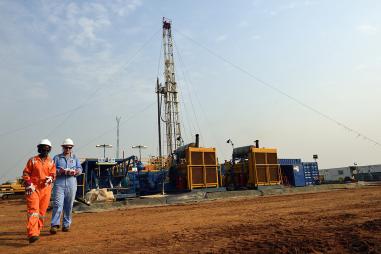
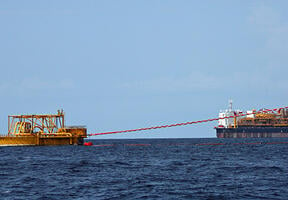
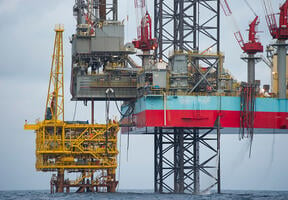
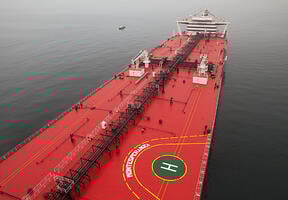
(Africa, June 2010). © Total / Dufour Marco
Planning the Site's Future - A Tricky but Essential Stage
Before extracting hydrocarbons from where they are buried underground, oil companies carry out in-depth surveys to determine if extracting the deposit will be profitable. They need to find out if the sale of the oil and gas will both cover the costs incurredduring the deposit's lifetime (survey, construction of facilities, extraction, and human resources) and generate enough profit.
Cost-benefit calculations are complex because there are so many different parameters to take into account. These calculations take place in a number of stages:
• First, the technical data is factored in, such as the deposit's depth and shape, reservoir features, and the type, distribution, and volume of hydrocarbons accumulated underground.
• Then, using this data, the number of wells needed to extract the deposit is estimated.
• Next, the most suitable facilities are chosen for the various stages of production on the site - drilling, processing products brought above ground, temporary storing and dispatching. The size of the infrastructure is determined according to the technical data available. Sometimes, oil companies compare a number of projects before choosing the most appropriate one (for example, these projects may differ in terms of the number of drilling forecasted operations).
• Meanwhile, a production profile is drawn up using simulation techniques. This involves predicting the production volumes of the deposit year to year, from beginning to end of extraction.
Therefore, economists base their predictions on hypotheses that calculate how much return extracting the deposit will make. Thus, there is a risk that money will be lost if the international economic situation does not match forecasts.
Once the project seems to be on solid economic ground, extraction can begin. At sea or on land, the facilities to be built must last a number of years.
How Is Underground Oil and Gas Extracted?
Production consists of bringing hydrocarbons trapped underground to the surface. Since deposits are huge (ranging from several square kilometers to over 100 km2), many wells have to be drilled to recover all the oil and gas contained in the reservoir. There are two main types of well:
• Conventional wells have been around since the 19th century - these are drilled vertically down to the reservoir. The area of contact between these wells and the deposit is relatively small, only a few dozen meters wide. To recover all the hydrocarbons present in the deposit, a large number of vertical wells need to be drilled.
• Horizontal wells use more recent techniques. Since they stretch out lengthwise, these wells have a much larger area of contact with reservoirs than vertical wells. Therefore, far fewer wells are needed to work a deposit, which makes for lower production costs. Thus, oil companies prefer horizontal wells to conventional wells if the deposit's shape, depth, and location are suitable for this type of well.
Throughout the deposit's life span, hydrocarbons arrive at the surface through the well. The inside of the well is lined with a fixed casing tube or drive pipe, set in cement on the surface, which stops the borehole from collapsing. Because oil and gas constantly flow through it, this casing can sometimes be subject to blockages or corrosion during extraction operations. This is why a special removable casing, called tubing, is inserted into the well. This tube can be changed easily if it gets blocked or corroded.
For the hydrocarbons to rise to the surface, air pressure in the well must be significantly lower than the pressure of the liquids in the reservoir:
• If this pressure difference exists naturally and is large enough, hydrocarbons will rise naturally towards the well and then to the surface. This is known as an eruptive deposit.
• The pressure of the deposit may not be enough to make the oil erupt above ground, particularly if its consistency is slightly viscous. In this case, steam, CO2, nitrogen or chemicals (solvents) are injected into the reservoir. This liquefies the oil while increasing its volume, causing it to rush into the production well. These processes are all known as assisted recovery processes.
In all reservoirs, pressure reduces as the deposit is emptied of its hydrocarbons. As the end of production draws near, assisted recovery is used to stimulate production.