Fossil Fuels
10 min read
Fossil fuels, which include , oil and gas, play a crucial role in our daily lives. For example, they our transport and factories and keep our homes warm or cold. But they are also the main contributors to greenhouse gas emissions, including CO2, which accumulate in the atmosphere. These emissions are a recognized cause of , which is seriously threatening the environmental balance of our precious planet.

© THINKSTOCK
What is fossil energy?
"Fossil energy" refers to energy produced by burning fossil fuels, namely coal, oil and natural gas. These carbon- and -rich fuels are formed from organic matter that has been buried below the surface for millions of years – hence the "fossil". These forms of energy are non-renewable, because once they have been used up they can only be replenished on a geological time scale.
The term " " refers to a chemical compound whose molecules are made up entirely of carbon and hydrogen atoms. Hydrocarbons are the main components of and natural gas, as well as refined petroleum products.
How are fossil fuel deposits formed?
Coal: When trees and plant debris are rapidly buried in certain sedimentary basins, they begin the long and gradual process of coal formation, transforming successively into peat, (brown coal), bituminous coal and finally , which is almost pure carbon. Most usable coal dates from the Carboniferous Period (360 million to 300 million years ago) or the more recent Tertiary Era. Coal has been consumed for centuries and is extracted from underground or surface mines. It was one of the factors behind the first industrial revolution in the 19th century.
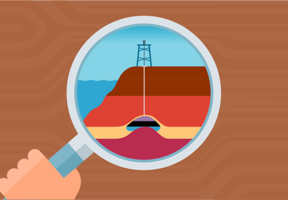
Oil and gas: The formation of oil and gas deposits also requires millions of years. The process starts when organic matter accumulates in the sediments of calm, poorly oxygenated environments, such as enclosed seas and lakes. Under the effect of , this mixture is transformed first into mud and then into "source rock" as it sinks deeper below the surface and the temperature rises. Then, the hydrocarbons (oil and gas) form before beginning their migration toward the surface. If the conditions are favorable, they accumulate in "reservoir rocks" inside closed spaces called "traps", which in turn become deposits.
These deposits vary in accessibility, and first must be located and studied during the multi‑stage exploration phase. They then move into production, a long and highly technical process that requires substantial capital expenditure and is subject to the economic constraints of the moment.
Crude oil cannot be used as is. First it must be processed into fuels and various other distillates for the chemicals and plastics industries through a several-stage refining process. Oil triggered the second industrial revolution in the early 20th century – and has kept it going ever since
What is the place of fossil fuels in the energy mix?
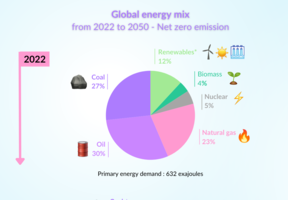
Today, fossil fuels make up more than three-quarters of global consumption, in transportation, industry and housing. They are also by far the leading energy source for generating , accounting for more than two-thirds of the total mix despite regular gains by renewable energies.
Abundant, cost-effective coal is still the No. 1 energy source for generating electricity. But it is also responsible for an enormous amount of greenhouse gas emissions, which could hinder its development if the international community intensifies its efforts to combat global warming through a "carbon pricing" scheme. Nevertheless, coal is often still essential to the growth of large, densely populated countries such as China, India, Indonesia and South Africa.
Oil and gas, meanwhile, have been at the center of global geopolitics for 40 years, which has had a very strong influence on oil price trends.
What is the influence of technology?
New technologies have repeatedly helped rewrite the economic conditions that govern hydrocarbon production, unlocking access to new deposits and bringing down costs.
For example, the rise of (and more recently deep offshore) has radically transformed oil and gas production, with groundbreaking technologies tapping reserves located deeper and deeper under the sea.
Back on dry land, and techniques have enabled the United States to develop production of and gas from the source rock itself (see the infographic on and gas). Enhancements to these same technologies have gradually helped to reduce the environmental impacts of heavy oil and production.
Digital technology is also optimizing the efficiency of industrial processes along the entire value chain, notably in the area of hydrocarbon exploration and production.
Is natural gas's star rising?
Natural gas emits half as much greenhouse gas as coal for the same amount of energy. Easy to use, it could serve as a convenient transition fuel while the world works toward the goal of a low-carbon economy.
Thanks to the development of , this resource now benefits from greater availability and more even geographical distribution. After undergoing a process, natural gas can be transported anywhere in the world on board an LNG , then regasified when it reaches its destination. LNG is thus free from the constraints associated with distribution through fixed gas pipelines, which are subject to geopolitical uncertainties and generally require long-term contracts in light of the very considerable investment required.
In 2016, the United States became a net exporter of LNG thanks to the development of shale gas, which has dramatically shifted the global balance of power between producing and consuming countries.
 This may interest you
See all